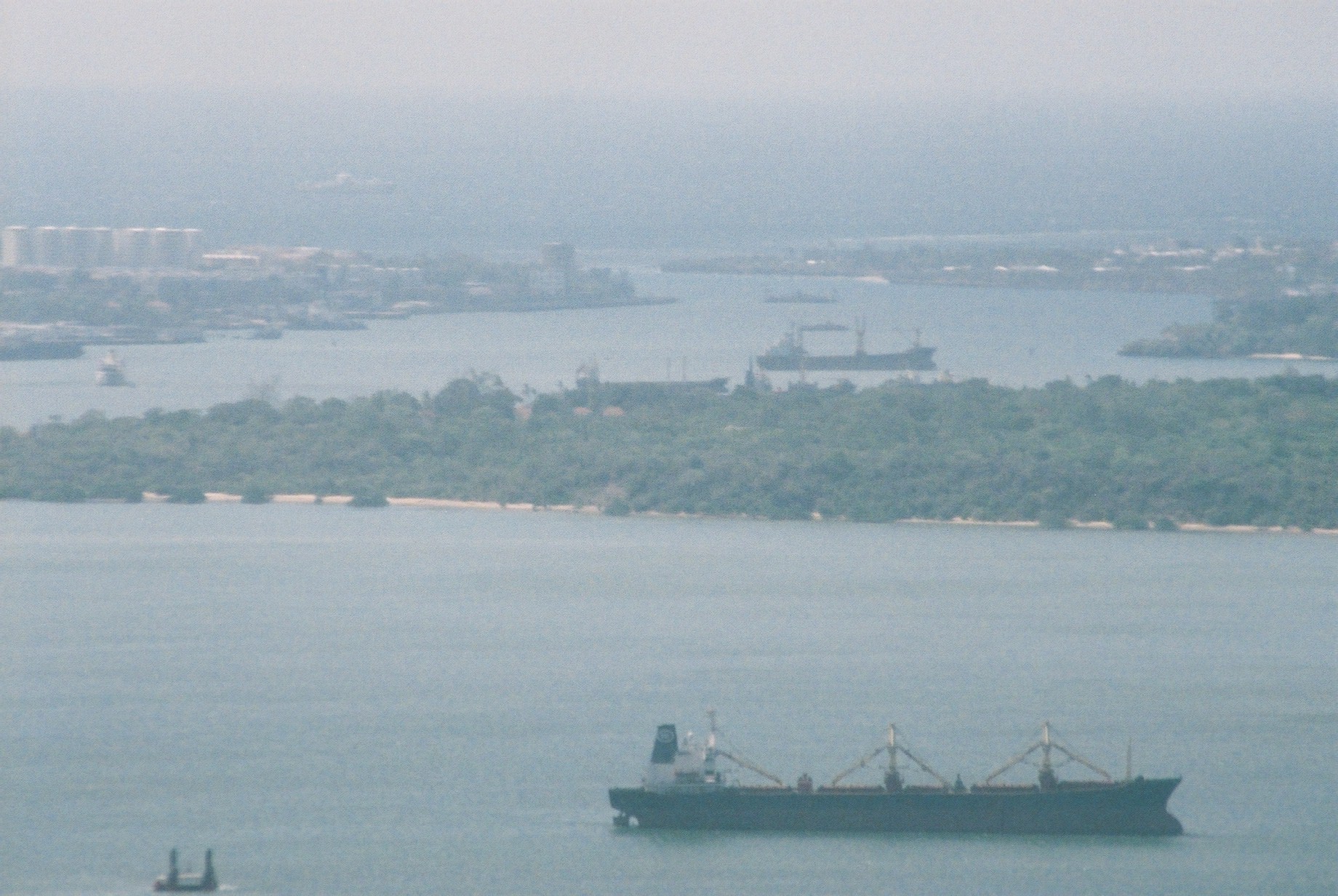
The role of port and inland routes amplifies this. Kenya Ports Authority describes Mombasa as directly connected to more than 80 ports worldwide and linked to Uganda, Rwanda, Burundi, eastern DRC, South Sudan, Somalia, and Ethiopia. It already operates 22 berths and two container terminals with capacity rising from 2.3 million TEUs toward 3.1 million TEUs. More importantly for high-temperature industries, it handles clinker, coal, steel, petroleum products, and bulk cargo. That means Kenya’s refractory demand is shaped at the same time by building-material operation, industrial heating, and regional distribution.
Building materials, clinker, and industrial heating create the main demand line
If Kenya is read only as a logistics point, the real hot-zone demand disappears. Mombasa’s cargo profile shows how important clinker and coal remain, while KNBS construction-input data shows that construction inputs continued to rise in 2025. For refractory suppliers, this points back to rotary kilns, burning zones, transition zones, coolers, and wider process-heating equipment as the more reliable center of demand.
Kenyan buyers therefore respond poorly to generic export-to-East-Africa language. They want to know whether the material is entering a local kiln line, an industrial-heating unit, or a route that also supports inland redistribution; whether the order is a one-time bulk arrival or a staged replenishment program; and whether the supplier understands zone-by-zone lining, repair materials, bagged monolithics, and maintenance rhythm.
Mombasa and inland transfer routes change product and packing decisions
One of the hard parts of Kenya projects is that delivery geography is itself a procurement variable. Cargo may stop at Mombasa, move to Nairobi ICD, or continue to Uganda, Rwanda, or other inland markets. As the route gets longer, pallet design, reinforcement, moisture protection, batch marking, unloading conditions, and handover responsibility stop being secondary details and begin to shape whether the material can be used on site in rhythm.
That is why refractory buying in Kenya often puts unusual weight on packing and batch discipline. Shaped products need stable pallet counts and clear size control, while bagged castables, ramming masses, and repair materials are more exposed to moisture, torn bags, and confusion after multi-stage transfer. Suppliers that tie the delivery point to the packing logic offer something more credible than a port-only quotation.
IDF, CoC, ISM, and the document chain make delivery a real industrial-organization problem
The Kenya import guide is explicit: imports commonly require IDF, customs entry, CoC for regulated goods, ISM when applicable, and valid commercial and pro forma invoices. On paper these look like trade-administration details, but for refractory cargo they directly reshape delivery planning. If the document chain or consignee data is unstable, the packing, batch, and inland-transfer plan becomes unstable too.
That is why the persuasive way to enter Kenya is not to say “we can ship to Mombasa.” It is to connect final delivery point, inland transfer, unloading conditions, document chain, regional replenishment, and plant rhythm into one execution line. Then the buyer sees not only a product catalogue but an industrial-supply plan that can pass through the East African corridor.
What this means for product logic in Kenya
- Building materials and rotary kilns: discuss burning zone, transition zone, kiln head and tail, cooler, and repair packages through uptime, zone-based lining, and maintenance planning.
- Industrial heating and maintenance: discuss ramming masses, castables, gunning mixes, and repair systems through short shutdowns, local repairs, and site-installation rhythm.
- Regional distribution and inland replenishment: discuss pallet stability, moisture protection, batch marking, and split delivery through the route from Mombasa to Nairobi and deeper inland markets.
- Document chain and handover: discuss IDF, CoC, ISM, invoices, and consignee naming through how material actually enters the plant rather than only reaches the port.